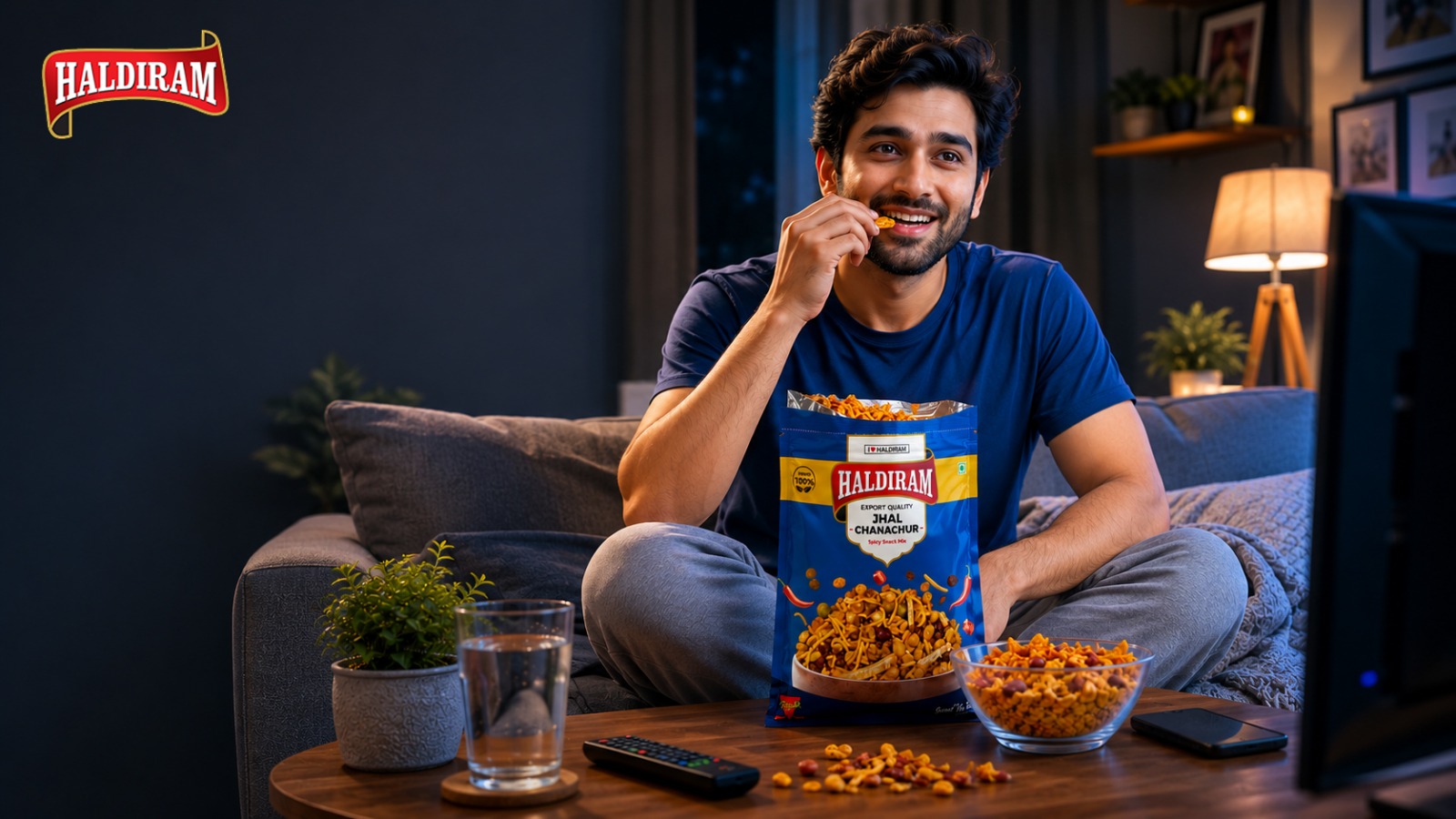
The packet crackles open before you even realize what you’re doing. One hand balances the TV remote. The other is buried wrist-deep inside a bright yellow haldiram snacks packet. A few rogue crumbs tumble onto your clean T-shirt. There’s that immediate, sharp hit of fried spices, curry leaves, and toasted peanuts. Salty. Comforting. Intensely familiar. Somewhere between the third handful and the empty glass bowl sitting on your lap, the question finally crawls out.
Is haldiram healthy? Not in the extreme, hyper-optimized fitness influencer way. Just honestly. Because let’s face it: almost every kitchen cabinet in India is hiding a stash of these haldiram products. A savory mix is our default setting for unexpected guests. Haldiram namkeen snacks accompany every long train ride. A midnight snack serves as the ultimate 11 PM coping mechanism. We shove those tiny, crumpled packets into office drawers right next to tangled phone chargers and half-finished notebooks. We quite literally grew up on this stuff.
The Comfort Food We Autopilot Eat
Walk into any corner grocery store. You’ll find entire aisles dominated by those shiny, metallic wrappers stacked shoulder to shoulder. Moong Dal. Khatta Meetha. Alloo Bhujia. Hara matar. When buying haldiram snacks, it never quite feels like junk food. That’s the trick. Unlike neon-blue potato chips or oversized, imported chocolate bars, haldiram carries a strange kind of domestic credibility. It smells like Sunday evening family gossip and heavy brass teapots. But nostalgia doesn’t clean up a nutrition label. Traditional recipes aren’t inherently healthy when scaled up to factory proportions.
So, what is the actual reality behind the question: is haldiram food healthy or not? Some haldiram namkeen products are perfectly fine in moderation. Others are absolute landmines of palm oil, sodium, and empty calories. A standard, modest serving packs anywhere from 150 to 300 calories. But nobody weighs out a single portion on a digital scale before a cricket match. You pour a casual handful. Then another. Soon, the bag stays open on the couch armrest like a silent dare. Before the episode ends, you’ve quietly consumed enough to equal a full dinner—except your stomach still feels entirely empty.
The Hard Physics of the 11 PM Crunch
Calories aren’t the villain here. Your body runs on them. The real issue is understanding haldiram snacks calories and their density. Take a fistful of a savory mixture. It vanishes in three seconds flat. Crunch, salt, spice, gone. Now compare that to eating a bowl of home-cooked lentils and brown rice. One requires actual chewing, signals your brain that you’re full, and sustains your energy. The other just triggers a neurological loop that keeps your hand diving back into the plastic bag.
Most of those haldiram snacks food calories come from a heavy-handed combination of deep-frying oil and refined carbohydrates. That specific fat-and-carb pairing is a cheat code for your brain’s pleasure centers. Your tongue throws a party. Your metabolic health? Not so much.
The hidden culprit is often the salt.
Mass-produced haldiram namkeen requires massive amounts of sodium to stabilize shelf life and keep the flavor sharp. You usually notice it around midnight. Your mouth feels like cardboard. You’re suddenly downing two glasses of cold water straight from the fridge, feeling a distinct, heavy tightness in your stomach. Your body always registers the impact long before your conscious brain admits it.
Deciphering the Fine Print
If you flip a haldiram snacks packet over, the typography gets tiny. It’s almost defensive. Most people glance at the block of text, see a wall of percentages, and immediately give up. But if you slow down and read haldiram namkeen nutrition facts like an investigator, the math gets interesting.
Pay attention to:
- The actual serving size (it’s often shockingly small)
- Total saturated fat per 100 grams
- Sodium milligrams per serving
The serving size gimmick is where most people get tripped up. A modest-looking bag might actually contain three or four standard servings. If you polish off the whole bag during a single YouTube video—which is exactly how it’s designed to be eaten—you have to multiply every scary number on that label by four.
The food isn’t inherently toxic; it’s just incredibly easy to underestimate.
Sorting the Better from the Bad
Are all haldiram items equally heavy? Not at all. Nuance is important here.
The deep-fried, potato-based, and heavy mixture options carry the highest fat content. On the flip side, their roasted pulses, plain moong dal, hara matar, or chana dal options integrate far better into a sensible routine.
Just don’t let a product like nut cracker completely disarm your common sense because it contains whole peanuts. Marketing psychology is incredibly clever. It lowers your mental guard, making it easy to justify eating half a kilo of spicy coated nuts because it feels closer to a wholesome ingredient. Deep frying the outer gram flour shell still packs a major caloric punch.
The Emotional Anatomy of a Midnight Snack
Sometimes, hunger is the furthest thing from your mind. You walk through the front door completely drained. Your shoulders are locked tight from staring at spreadsheets for nine hours. The apartment is dead quiet except for the rhythmic clicking of the ceiling fan. You aren’t looking for vitamins. You want a quick hit of relief.
That’s when looking for haldiram snacks online at 1 AM feels entirely rational. A couple of taps on glass. Fifteen minutes later, a rider drops off a cold plastic bag. You tear open the yellow pack. For ten minutes, the crunch provides a genuine, grounding comfort.
There’s no shame in that. Human beings have used food for emotional regulation for thousands of years. The friction only starts when that emergency comfort mechanism transforms into a daily evening ritual.
The Final Verdict
Let’s look at the raw facts. Compared to a bag of ultra-processed, neon-orange American potato chips, haldiram actually uses recognizable ingredients. Chickpea flour. Lentils. Real spices. Mustard seeds.
It feels closer to real food because it is. But deep frying is still deep frying, no matter how nostalgic the packaging looks.
If you want to enjoy your savory treats without the immediate payload of guilt, change the environment:
- Never eat directly from the bag. Pour a portion into a small bowl and clip the packet shut. Once your hand can’t mindlessly dive into the bag, your brain wakes up.
- Contextualize the snack. Don’t make it the main event. Pair a smaller handful with some fresh fruit, a handful of raw almonds, or a cup of black tea to actually satisfy your physical hunger.
The company designs haldiram products for maximum flavor impact, not for your personal wellness goals. That doesn’t make the brand evil. It just means they make snacks.
The real issue isn’t eating some savory mixes with your family during festive holidays. It’s the quiet, subconscious habit of self-medicating with salt and oil every single evening when your body is actually begging for hydration, a stretch, or just eight hours of uninterrupted sleep.
The answer isn’t black or white. It’s sitting right there between the satisfying crunch of that very first bite and the crumpled, empty plastic wrapper left on your coffee table.
Frequently Asked Questions
Q1: Is haldiram healthy to eat on a daily basis if I practice portion control?
No, daily consumption exposes your system to excessive palm oil and sodium that disrupt metabolic health over time. When exploring if is haldiram healthy, save it as an occasional treat rather than an everyday routine.
Q2: How many calories am I actually consuming in one sitting?
While a single serving is 150 to 300 calories, a full haldiram snacks packet often contains three to four servings. Finishing a whole bag mindlessly can easily push your intake past 900 haldiram snacks calories without making you feel full.
Q3: What should I look for on a haldiram namkeen nutrition label to make better choices?
Focus strictly on the serving size, sodium, and saturated fat listed in the haldiram namkeen nutrition facts. Since listed numbers usually cover only a tiny fraction of the pack, tracking this helps you swap heavy haldiram namkeen products for lighter options.
Q4: Is haldiram food healthy or not for weight loss journeys?
The reality of whether haldiram food is healthy or not for weight loss comes down to its high calorie density and very low satiety. Lacking fiber and protein, these snacks lead to accidental overeating and a quick caloric surplus that stalls your progress.
Q5: Are there any specific haldiram products that are better for late-night cravings?
If you are looking for haldiram snacks online at midnight, skip the heavy, deep-fried mixes and potato sticks. Instead, choose lighter haldiram products like roasted chana, plain moong dal, or hara matar to get that salty crunch with a much lower fat payload—and if you grab a handful of chana dal or nut cracker, just remember to measure out your portion first.